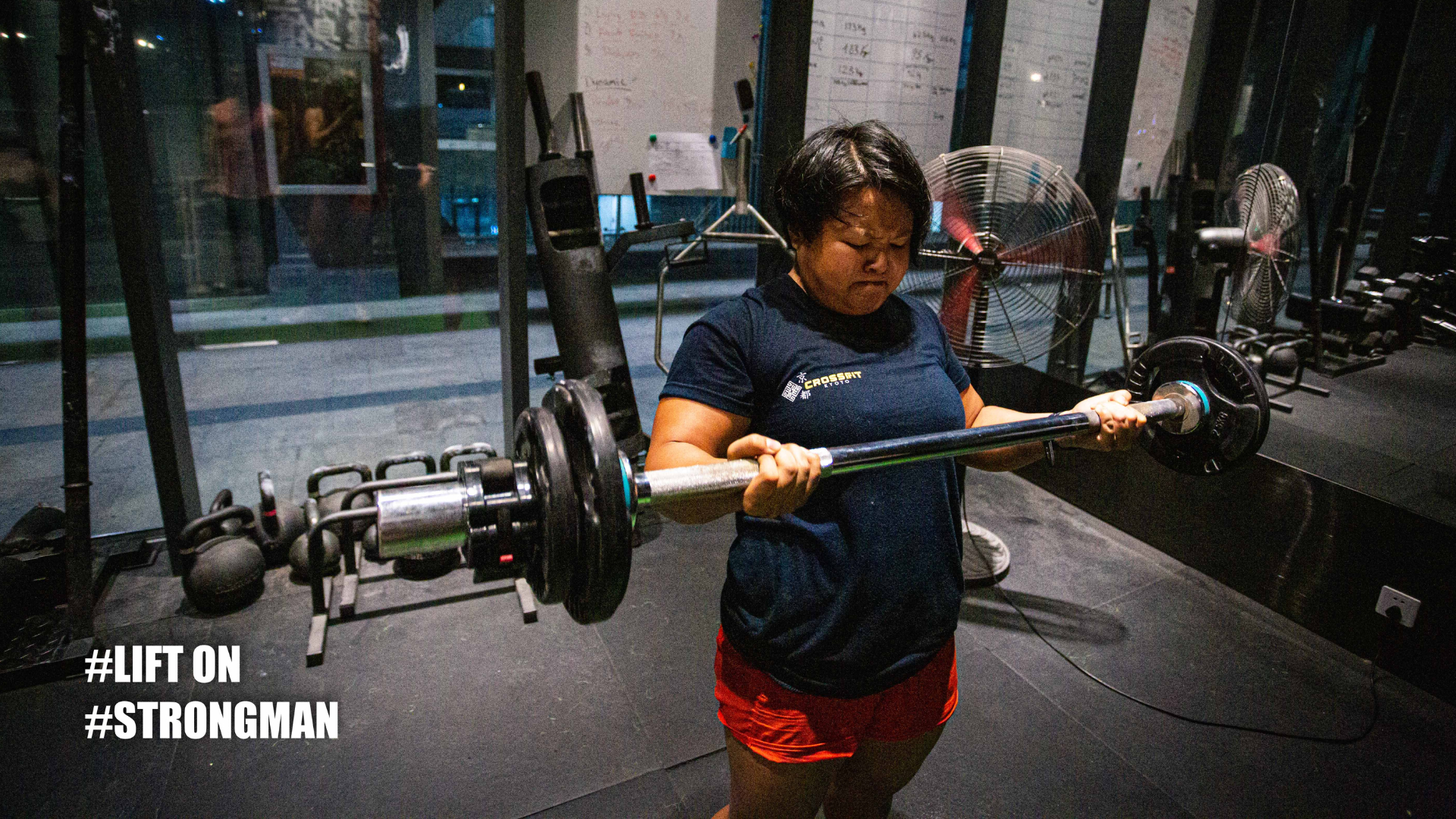
You didn't yell at your team because you're a bad leader. You snapped at your partner because you're a bad partner. You cried in the car because you're weak. None of that is true — and yet, the shame spiral after a high achieving women cortisol explosion is often worse than the explosion itself. Here's what nobody tells you: the women most susceptible to these moments aren't the ones who can't handle pressure. They're the ones who've been handling too much of it, for too long, with no acknowledged cost.
The Woman Who Has It Together Is the Most at Risk
There's a particular kind of woman who ends up in this situation. She's the one everyone relies on. She's competent under pressure, calm in a crisis, and almost never asks for help because she's already solving the problem by the time someone else notices there is one. She's been this way since she was young — the capable one, the responsible one, the one who figured it out.
That identity — that deep, structural identity — is exactly what makes her nervous system more volatile than almost anyone around her. Not less. More. The very traits that make her exceptional at her work are the same traits that quietly, relentlessly drive her cortisol higher, day after day, until one ordinary Tuesday afternoon, something small happens and she absolutely loses it.
A passive-aggressive email. A meeting rescheduled for the fifth time. A child asking where the scissors are. And suddenly she's not calm, competent, or in control. She's shaking, or cold, or saying things she'll spend the next three days regretting. This is not a character flaw. This is biology operating exactly as designed — under entirely the wrong conditions.
Why Does Cortisol Build Differently in High Performers?
Cortisol is your body's primary stress hormone. It spikes when you perceive a threat — real or imagined, physical or social — and it's supposed to drop back down once the threat passes. That's the design. See the lion, run from the lion, cortisol clears, you recover. Simple cycle.
But high-achieving women don't operate in simple cycles. They operate in back-to-back meetings where every conversation carries invisible stakes. They carry the cognitive load of their own work plus the emotional labor of managing the people around them. They've often been socialized to suppress visible distress — to stay professional, stay measured, never let them see you sweat — which means the cortisol rises, but it never gets discharged. It just accumulates.
Researchers call this allostatic load — the cumulative biological cost of ongoing, unresolved stress. Your body keeps score. Not metaphorically. Literally. Every suppressed reaction, every powered-through afternoon, every "I'm fine" that was actually a lie adds to the account. And accounts that never get paid down eventually overdraft. That overdraft is what a cortisol explosion feels like from the inside.
There's also a specific pattern worth naming: high achievers tend to have a high activation threshold paired with a low recovery buffer. They can tolerate enormous amounts of stress before showing visible signs — which means they often have no idea how close they are to the edge until they're already over it. The explosion feels sudden to them and to everyone around them. But the body has been building to it for weeks.
What High-Achieving Women Try First (And Why It Doesn't Work)
When a woman starts noticing these moments — the disproportionate reactions, the shaking hands, the tears that arrive without permission — she usually does what she does with every other problem. She tries to solve it efficiently. She downloads a meditation app. She books a yoga class. She adds "journaling" to her morning routine, attempts it twice, and then feels guilty about not journaling on top of feeling guilty about snapping at her assistant.
None of these things are bad. But they're all addressing the wrong layer of the problem. They're treating cortisol accumulation as though it's a mindset issue, a habits issue, or a self-care gap. It isn't any of those things. It's a nervous system regulation issue — and your nervous system doesn't respond to effort and discipline. It responds to physiological signals. You cannot think your way out of a cortisol storm.
The other common attempt is restructuring. She delegates more. She protects her calendar. She takes a long weekend. And she comes back feeling better — for about eleven days, until the accumulation starts again and she's back in the same pattern. Because the problem isn't the workload. The workload is a contributing factor. The actual problem is that her body never fully discharges the stress responses it activates. It just adds them to the pile.
This is the part of the conversation that most wellness advice skips entirely. It's also the part that changes everything when you finally understand it. If you've been wondering why you're doing "everything right" and still losing it in the parking garage, this is your answer. You've been solving the symptom. Not the system.
The Real Reason High-Achieving Women Cortisol Explosions Are So Common
Here's the reframe that matters: this isn't about being too sensitive, too stressed, or too ambitious. It's about a nervous system that has been trained to perform, suppress, and push through — with no corresponding training in how to discharge, recover, and reset.
High-achieving women are disproportionately affected by cortisol explosions for three intersecting reasons. First, they carry more categories of stress simultaneously — professional responsibility, relational responsibility, often the invisible load of managing everything and everyone around them. Second, they've developed a high tolerance for stress that masks how dysregulated their nervous systems actually are. Third, and most critically, they've often built an identity around not showing distress — which means every suppressed reaction is stored rather than released.
That storage has a ceiling. When you hit it, the explosion isn't a failure of willpower. It's a pressure valve doing exactly what pressure valves do. The problem isn't the explosion. The problem is the architecture that made one inevitable.
Understanding what the snap point actually is and how it works in your nervous system is the first step toward building something different. Because once you understand the mechanism, you stop blaming yourself for it — and you start addressing it directly.
What Actually Interrupts the Pattern
Nervous system regulation isn't a wellness concept. It's a physiological process. And like any physiological process, it responds to the right inputs at the right time — not to effort, not to intention, and not to insight alone.
The research on cortisol regulation points consistently toward a few key mechanisms. Physiological sighing — a double inhale through the nose followed by a long exhale — activates the vagus nerve and produces measurable cortisol reduction within seconds. Cold water on the wrists or face triggers a dive reflex that interrupts the sympathetic spiral. Slow, extended exhales shift the autonomic nervous system from sympathetic activation (threat mode) toward parasympathetic recovery (rest mode). None of these require a yoga mat, a meditation cushion, or fifteen minutes of uninterrupted time.
They require knowing what to do and doing it before the cortisol accumulation hits critical mass. That means building in small, regular discharge moments throughout the day — not just hoping a Saturday morning run will clear the whole week's accumulation. Proactive micro-regulation is categorically different from reactive crisis management. One prevents explosions. The other just delays them.
This is why a 30-second nervous system reset between meetings isn't a small thing. Done consistently, it fundamentally changes your cortisol baseline. It's not about stress management in the conventional sense. It's about preventing the overflow that makes explosions inevitable.
How Do You Know If Your Nervous System Is Already in the Danger Zone?
The warning signs are specific, and once you know them, you'll start recognizing them in real time — which is exactly when they're useful. Sleep disruption is one of the earliest indicators: the kind where you're exhausted but can't fully drop into sleep, or you wake between 2 and 4 a.m. with a mind that immediately starts running. That pattern is a cortisol signature, not an insomnia problem. The wired-but-tired feeling that keeps you from sleeping even when you're completely depleted is your nervous system stuck in activation mode.
Other signs include disproportionate irritability — reactions that feel bigger than the trigger warrants, even to you. Difficulty making small decisions. A persistent low-grade feeling of being "on" even when nothing is actively happening. Emotional numbness that alternates with unexpected emotional flooding. These aren't personality traits. They're dysregulation symptoms.
The pattern of high achieving women cortisol explosions often follows a predictable cycle: a period of high function where everything looks fine from the outside, followed by a rapid decompensation that feels sudden but wasn't. The decompensation phase is the visible part. The accumulation phase is invisible. Learning to read the accumulation phase — to recognize your specific early signals — is what gives you genuine leverage over the pattern.
Building a System That Prevents Overflow
Managing cortisol as a high-achieving woman isn't about lowering your standards, slowing down, or choosing between your ambition and your wellbeing. That's a false trade. It's about building a physiological infrastructure that matches the demands you're actually operating under — not the demands of a person with a much simpler life.
This means understanding your personal cortisol curve throughout the day. Cortisol naturally peaks in the morning and declines through the afternoon — but in chronically stressed high performers, that curve often flattens or inverts, leaving you exhausted in the morning and wired at night. Working with that curve rather than against it changes how you structure your days, your recovery windows, and your most demanding work.
It means treating recovery as a technical skill, not a reward you get when everything is finished. Because everything is never finished. If recovery is contingent on completion, you will never recover. The nervous system doesn't negotiate with your to-do list.
And it means understanding the difference between surface exhaustion — the kind a good night's sleep fixes — and structural exhaustion, the kind that accumulates beneath the surface and doesn't respond to rest alone. Structural exhaustion requires a different approach entirely, and most high-achieving women are carrying it without realizing it has a name or a solution.
The good news — and there is genuinely good news here — is that the nervous system is plastic. It responds to consistent, targeted input. The pattern of high achieving women cortisol explosions is not your permanent baseline. It's a trained response to a set of conditions that can be changed. Not by working harder, or being better, or wanting it more. By understanding the system you're actually working with and giving it what it needs.
You built extraordinary capacity to handle pressure. Now it's time to build equal capacity to discharge it. That's not a retreat from your ambition. It's the thing that makes it sustainable.
You Don't Have to Keep White-Knuckling This
If this article sounds like a description of your life — if you recognize the high activation threshold, the invisible accumulation, the moment where something small finally breaks through — you're not alone, and you're not broken. You're a high-performing woman whose nervous system has never been given the right tools for the environment she's actually in.
The Snap Point Protocol is built specifically for this pattern. It works with the physiology of cortisol accumulation and gives you a precise, fast-acting method to interrupt the cycle before it reaches overflow — without meditation retreats, without overhauling your schedule, and without adding another item to a list that's already too long. It takes under thirty seconds. It works in the middle of a real day. And it addresses the mechanism, not just the symptom.
If you're ready to stop managing the aftermath of cortisol explosions and start preventing them, start with the protocol. Your nervous system will respond faster than you expect.
Frequently Asked Questions
What exactly causes cortisol explosions in high-achieving women?
High achieving women cortisol explosions are caused by cumulative cortisol accumulation — stress hormone that activates repeatedly throughout the day but never fully discharges. The explosion itself is typically triggered by something small, but the actual cause is weeks or months of unresolved physiological stress stored in the nervous system.
Is it normal to feel ashamed after snapping or losing control emotionally?
The shame response is extremely common, but it's not useful here. These moments aren't failures of character — they're physiological overflow events. Understanding the mechanism makes it easier to address the real problem rather than spending energy on self-blame that doesn't change anything.
Can high achieving women cortisol explosions be prevented, or just managed after the fact?
They can absolutely be prevented, but prevention requires working at the physiological level — not just the behavioral or psychological level. Regular nervous system discharge throughout the day changes the cortisol baseline significantly, making overflow events far less likely over time.
Why don't typical stress relief strategies like yoga or meditation fix this?
Yoga and meditation aren't ineffective — but they address stress at the surface level and require significant time to practice consistently. They also don't target the in-the-moment accumulation that happens across a real workday. What's needed are fast, physiologically precise interventions that work in real-time, between real demands.
How is this different from regular burnout?
Burnout typically refers to a longer-term state of depletion. Cortisol explosions can happen even when you're not technically burned out — they're a symptom of acute nervous system dysregulation rather than chronic depletion. That said, the two often coexist, and unaddressed cortisol accumulation is one of the primary drivers of eventual burnout.
How quickly can nervous system regulation techniques actually work?
Certain physiological interventions — like extended exhale breathing or the physiological sigh — produce measurable changes in heart rate variability and cortisol response within seconds. Building a consistent practice changes your baseline over days to weeks, not months. The nervous system is more responsive than most people expect.